Symbiotic Wicked Problems
Framework, for complex problems
Gonzalo Raineri
Designer and educator
About this course
A wicked problem keeps changing while you work on it. It cannot be stated in full before a solution is tried, because stating it is already choosing one. It has no point where it is done. The work ends when the time or the money does. Its solutions are not right or wrong but good or bad, and good for whom. Every one is unique, every attempt counts, and whoever made it answers for what follows.
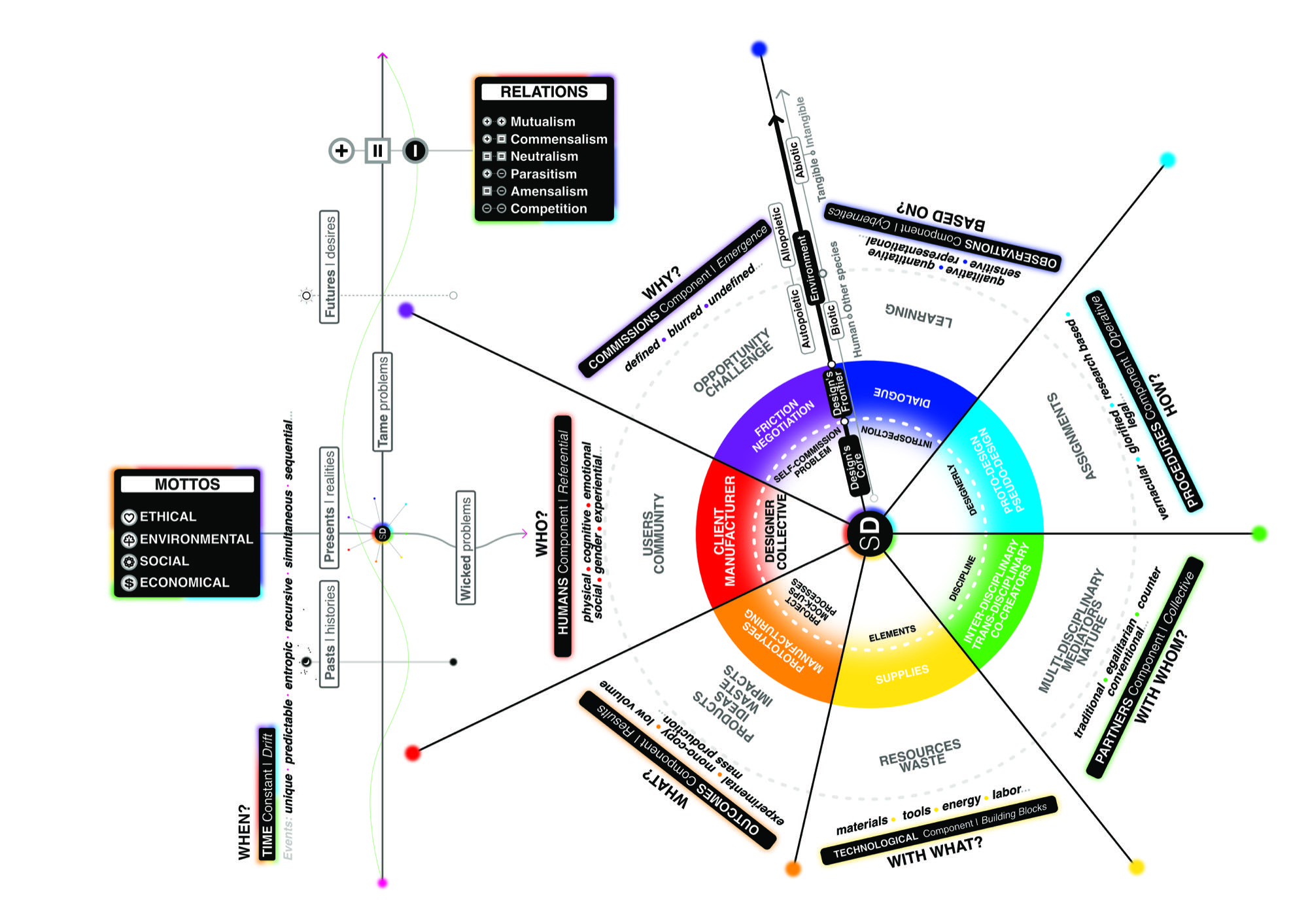
Most sustainability failures are wicked problems treated as tame ones: a method applied, a figure met, and the harm moved somewhere else. Symbiotic Design was built for this ground. It holds the whole picture in view while the problem moves, and keeps asking what each relation does to everyone in it.
This course shows how the framework works when the problem will not hold still: the components all at once, the relations read as they shift, ethics first at every turn.
You leave able to recognise a wicked problem, stay with it without calling it solved, and act with the consequences in view.
What you will be able to do
- Recognise a wicked problem by its marks: no full statement, no stopping point, no answer that can be checked as right.
- Hold the whole framework in view while the problem moves, instead of running a method through it.
- Read the relations in a project as they shift, and name which ones give and which ones take.
- Act with the consequences in view, knowing each attempt counts.
- See that most real projects are both tame and wicked, and tell which part is which.
Your instructor
Founder of the Academy, Bioclimatic Architect and expert in Symbiotic Design, the new frontier for sustainability